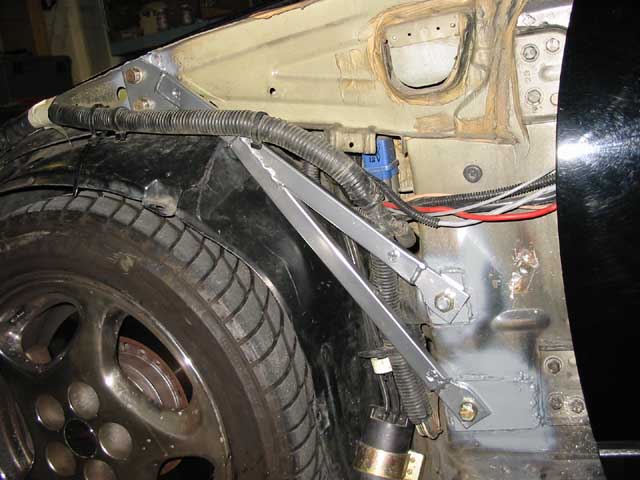
This Fender brace, when first installed-- was nothing short of a
miracle-- what it did to remove the front-end
cowl-shake.
It grabs the fender rail almost at the point where the shock-tower is,
and goes as low as possible to two very
strong points on the A-pillar, in the straightest line, and with the
shortest sections possible. The only reason
I did not go further towards the front of the car on the fender
mounting point, was: it impinges on the wheel
well liner badly, as it is. If I went forward more, it would possibly
cause the tire to hit it.
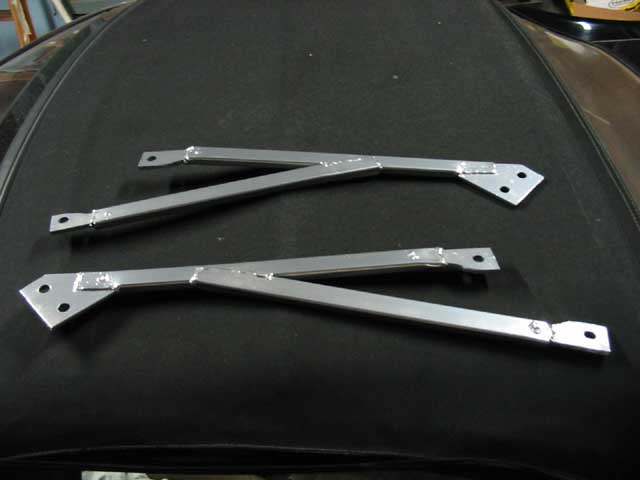
The braces by themsleves. Made from 1" x 0.3" steel tubing and 1/4"
thick plate.
An alternative design I am not that crazy about. I think it does not
grab the fender close enough to the
shock tower and also, the upper brace section may be fastened to
something strong (door hinge),
but--at that angle: what does it contribute? Also, as we will
see, the fender attachment must eventually fail,
the sheet metal of the flange it is attached to is extremely flimsy.
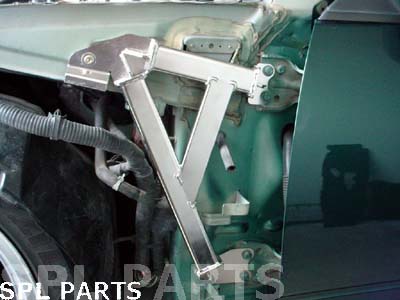
My lower mounts are on the A-pillar, as illustrated.
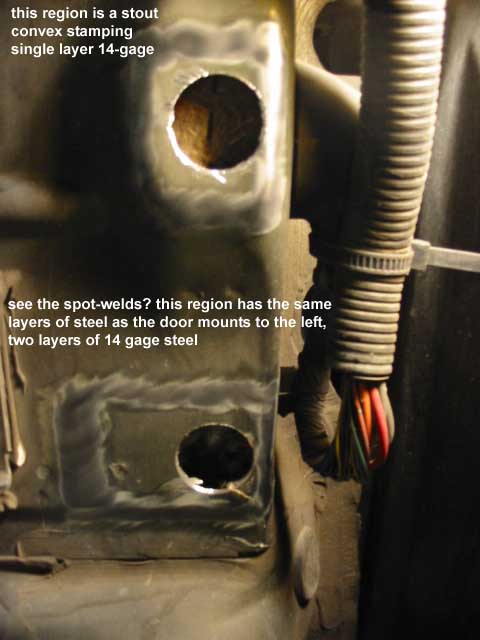
The upper A-pillar mount
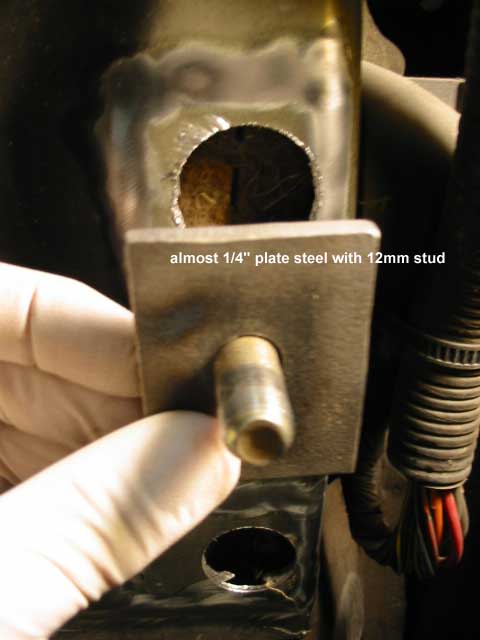
The lower A-pillar mount.
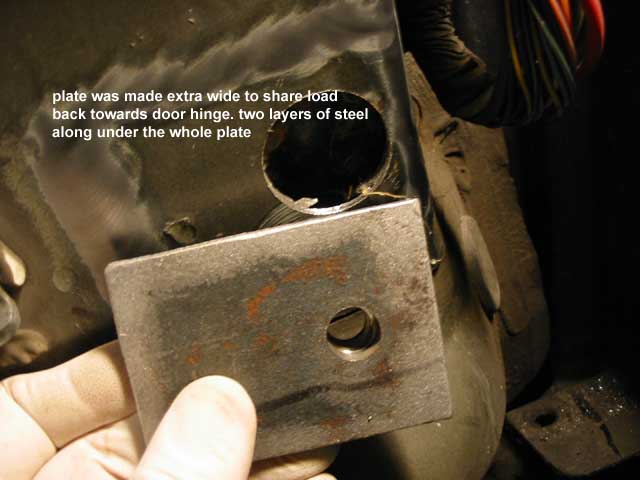
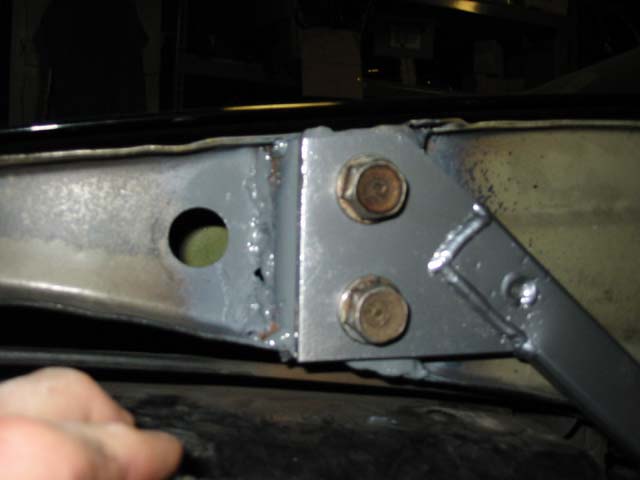
The upper fender mount. I believe we have a problem here. it
welds the top flange and bottom flange and the
fender section itself. but the fender steel is barely 20 gage, and is
stamped together with two flimsy flanges
that are spot-welded very loosely. I believe the fender itself is
slowly coming apart, but the brace mounting
point is holding. I've inspected the brace mount and it's
fine. Weakening of the spot-welds would be hard to
see or prove.
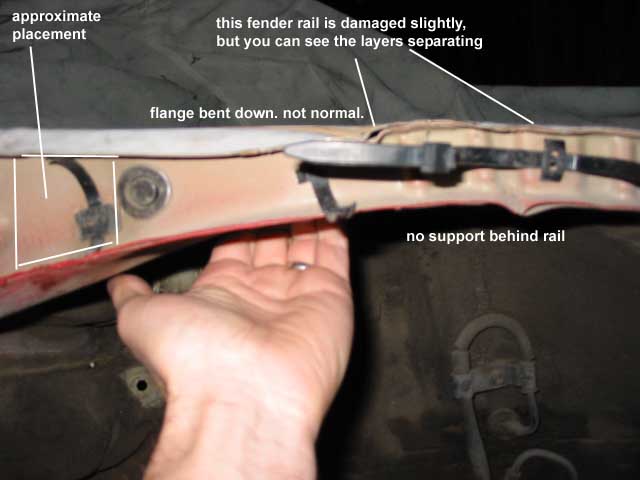
Some illustrations of how weak the fender really is. This is a
wrecked fender which, actually shows some
of the weakness of the rail.
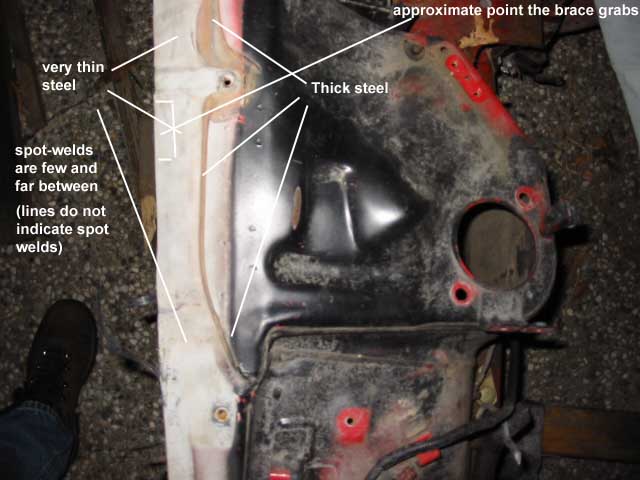
A view from the top. The shock tower is an extremely complex and stout
stamping of some thick 16 or 14-gage steel
It forms a sort of "half-bucket" that is extremely rigid. The fender,
which the shock-tower is spot-welded to,
is extremely flimsy, in comparison.
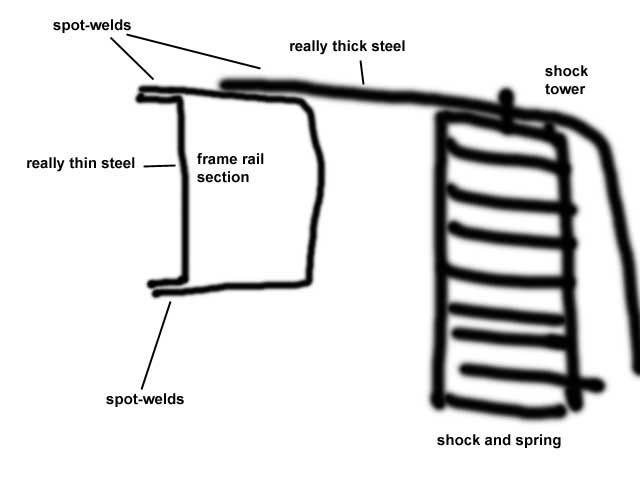
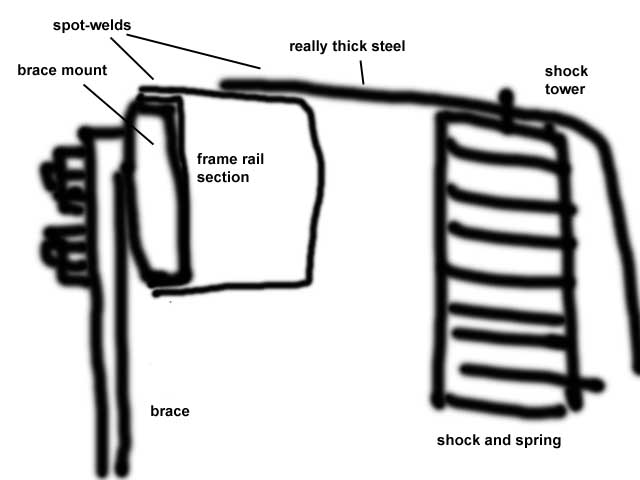
a cut-away view of approximately how the steel sections are formed. I
drew the layers not touching, so you can see the
layering. There are spot-welds, but it is easy to drive a screw-driver
between the welds on the fender rails and spread
the flanges open like a tin can.
Here's how the 3/16" thick steel brace mount attaches to the fender
flanges and side of the rail.
it is possible the strong mount and stiff brace is simply slowly
peeling the fender apart, and perhaps
from the shock-tower as well. I cannot see visual confirmation (yet),
but I feel it worsen every day.
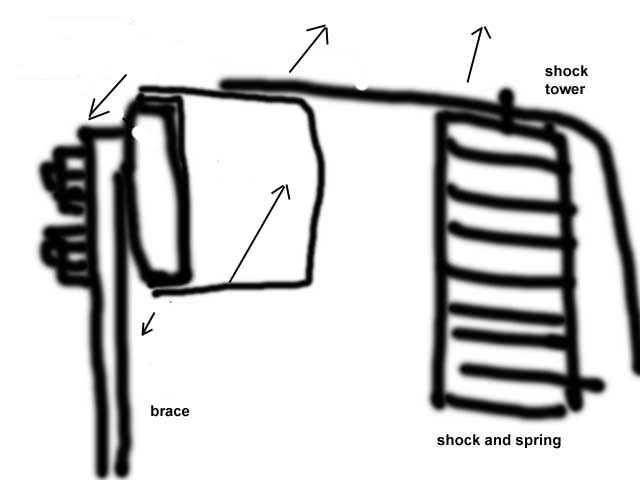
What may be happening is this: the tower pulls up and in towards
the inside and the brace keeps the outside edge still.
The fender section goes trapezoidal. And it weakens the already
extremely flimsy seam/flange. Remember, most of the
flange is not welded/boxed in by the brace, so it's sections can be
pulled apart at the flange. They are crush-zones, after all.
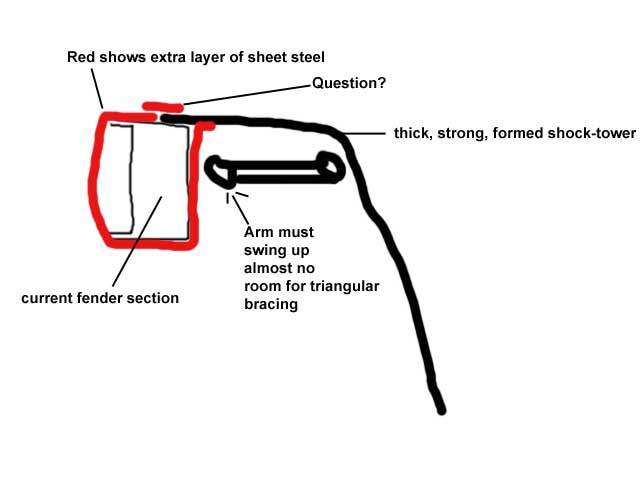
After inspecting the area a little more closely, I think something like
the below picture can be done to extend the strength of the shock tower
out to
the fender rail, so the brace attachment point is a little
stronger. I looked carefully for ways to put triagular braces
under the fender rail and shock tower, but the upper suspension arm
must swing upwards and takes most all the space we'd want for something
like that.
Then I'd foam the rails with the heaviest stuff I have to further
strengthen them.
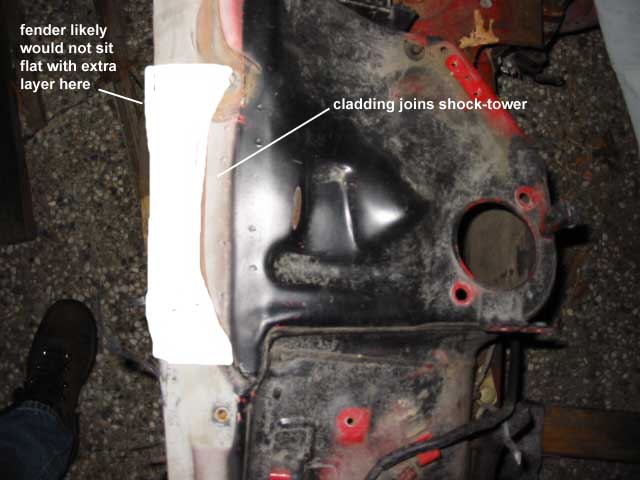
Question: on top, where the new layer of cladding would join the
existing shock-tower layer, would I need to put some sort of
patch layer over the seam, or not? maybe a butt-weld/seam-weld?
Maybe bend the edge up and layer it over the shock tower?
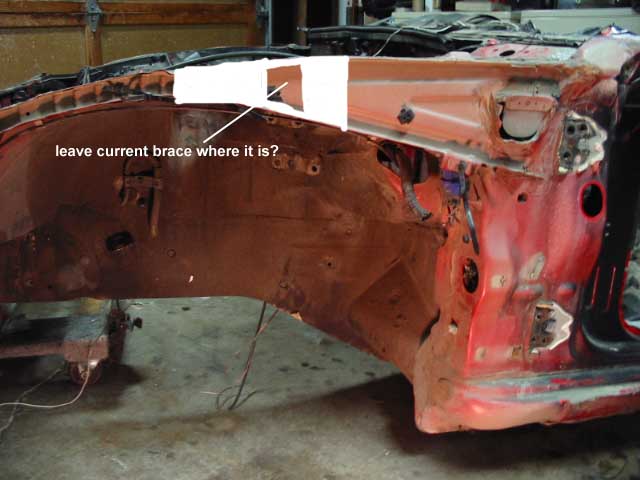
Side shot, driver's side:
I am thinking of just working around the current brace and leave the
brace mounts where they are on the fender and weld to them, and surround
them with a thicker layer of sheet steel.
Overhead shot, passenger side:
The steel layer up-top would come over and meet the thick stuff the
shock tower is made of. I would not do the whole
entire fender rail, since foam would be eomplyed and out main goal is
to strsngthen the connection to the shock tower,
and let the brace brace the fender to the frame.
Also, something would need to be done about the fact the fender might
not sit well on an extra layer of sheet steel.
IDEA #2
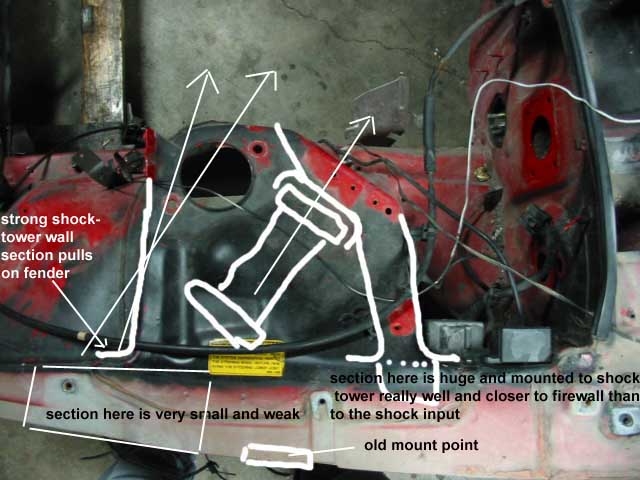
here's a good look at the driver's fender from above.
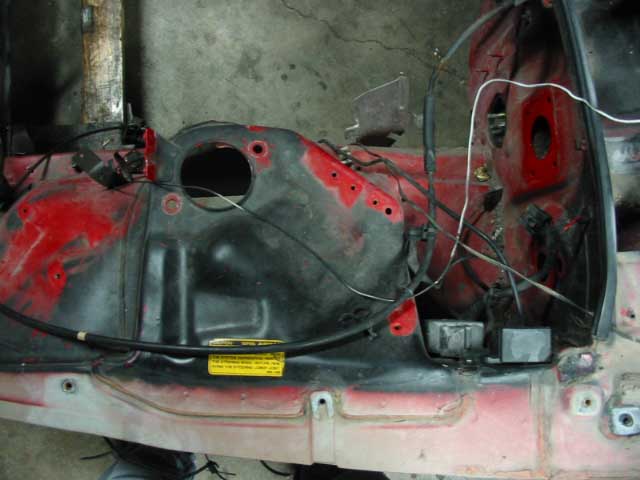
This explains the sections from the shock-tower and their strengths,
The A-arm box section actually holds the fender rail
near the firewall, very very well and even has flaps under the rail and
along the sides. The front wall of the shock
tower is not much more than 1 or 1.5" tall and only folds a small
flap that welds to the fender.

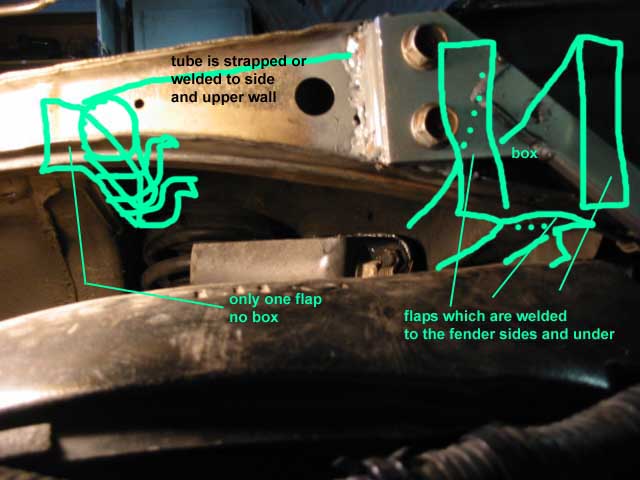
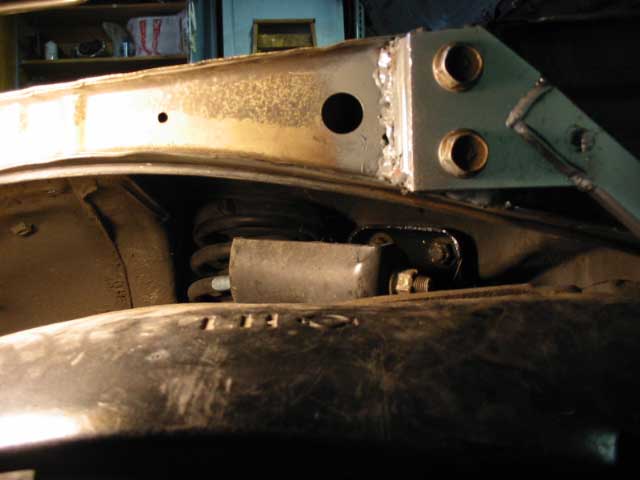
this is a difficult view to photograph, but should help illsutrate what
is outlined above.
I think if you stick your hand in there, and feel around, you'll be
able to find the walls and flaps I am talking about.
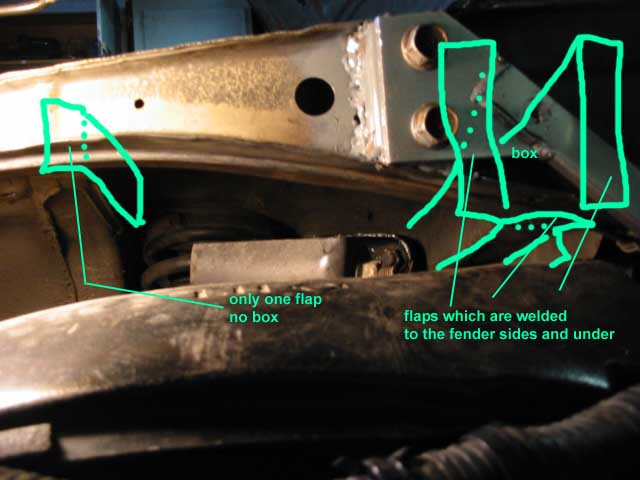
here I try to superimpose where the walls and boxes are. you can see
that where the shock tower mounts
to the front of the fender the section is very small and weak in
comparison to where it grabs in the rear.
This one shows how the shock-tower mounts to the fender rail and also,
the forces that are likely acting on it
relative to the position of the first fender brace mount. I am
starting to believe that no matter what, if a brace is
to be used, the mount point must be at the forward section of the
fender where it meets the front of the shock tower
or the motion will not be quelled. So, what to do?
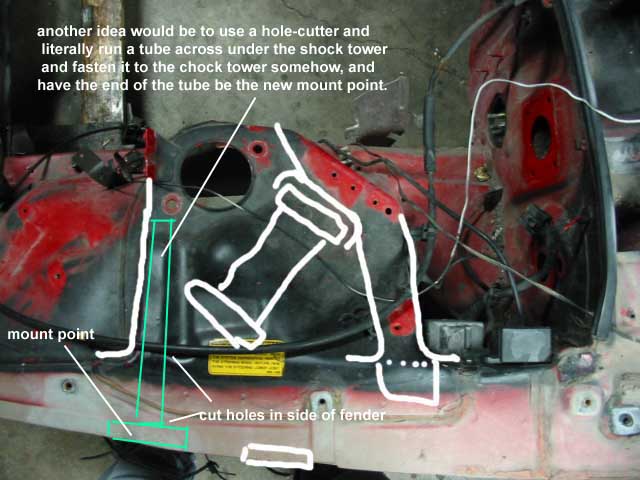
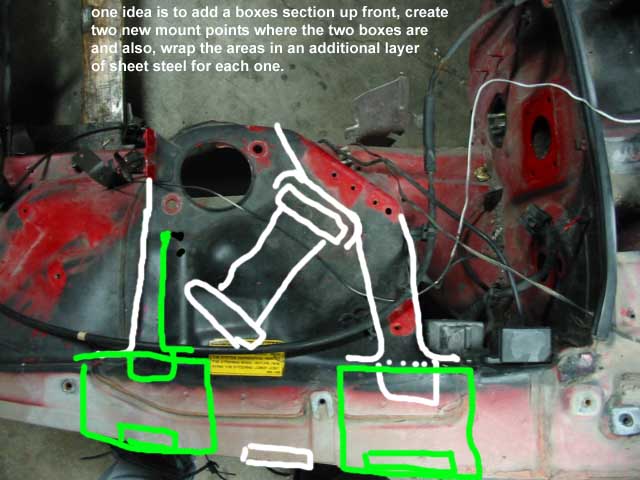
one idea, which involves adding a long almost tubular box to the front
section and then cladding two new mounts points
with an additional layer of sheet steel. The additions are in green. In
this way, we get a pretty prositve grip on the
shock tower where I think it matters most.
I hope this does not confuse things, but this is kindof how the front
section would look from underneath,.
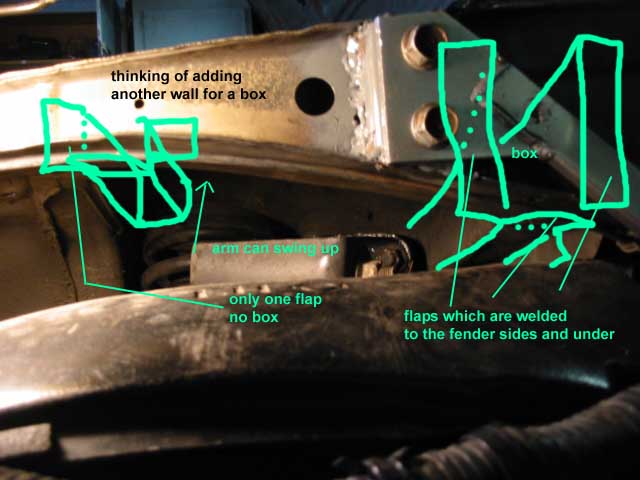
This idea for the front section might be even more stiff. cutting a
hole all the way through the two fender walls
and fitting a stout tube flush with the underneath wall of the shock
tower. Somehow, mount it firmly to the
shock tower side and upper wall, and the end of it becomes the mount
point you attach to for a brace.