Discussion of Z32
Convertible bracing and some ideas
Z32 Coupe
owners who think their frame needs stiffening should
really try driving a Z32 convertible. It's a lesson in
smoothness
"most of the time" but also, side-to side cowl-shake that can rattle
your bones
and make driving slowly on any kind of "less-than perfect pavement"
unpleasant.
Lets see a graphic illustration of why:
The car has no roof of course, so lets make one out of masking tape to
see
which direction the car flexes when it gets suspension input from a
front wheel.
We can get a good idea of what the roof does for us, and what we are
missing when
it's gone.
This is the view before starting the experiment. I only did one
diagonal piece
to prevent the tape from crossing, sticking and supporting each other.
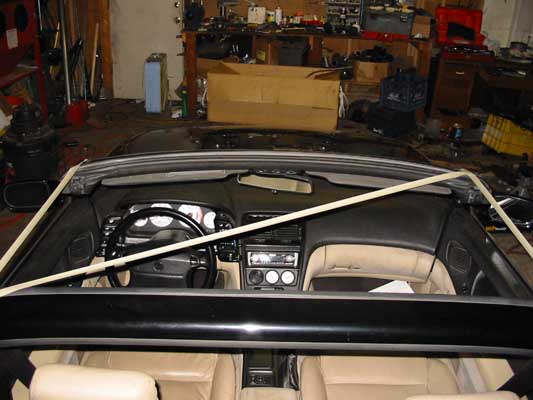
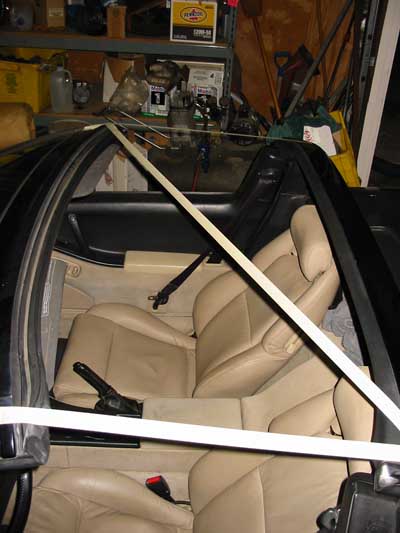
The view down the driver's side longitudinal piece.
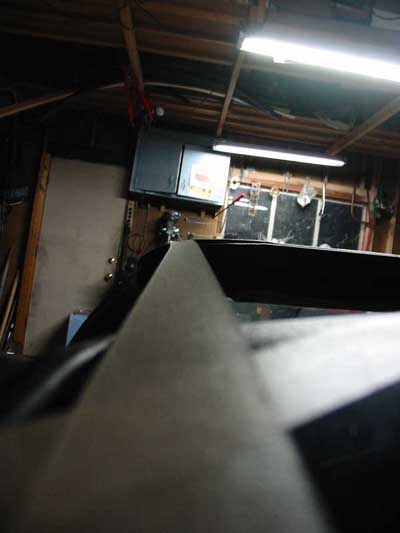
The view down the
passneger's side longitudinal piece.
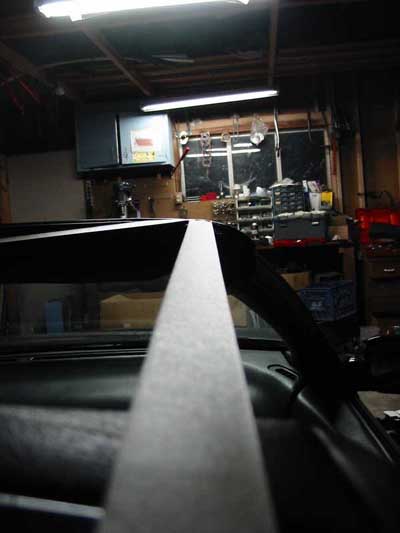
The view accross the
lateral/diagonal piece from back to front.
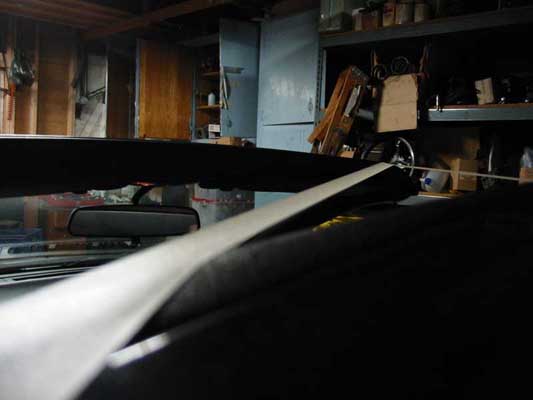
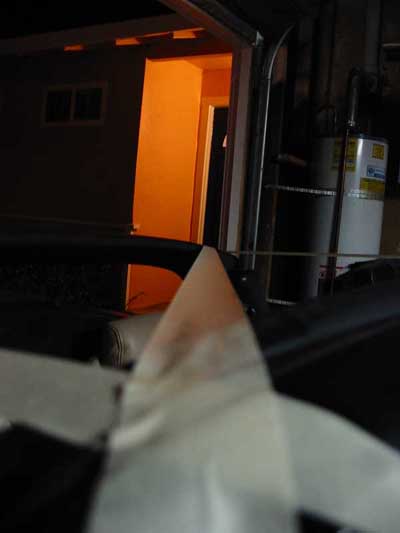
The view accross the
lateral/diagonal piece from front to back.
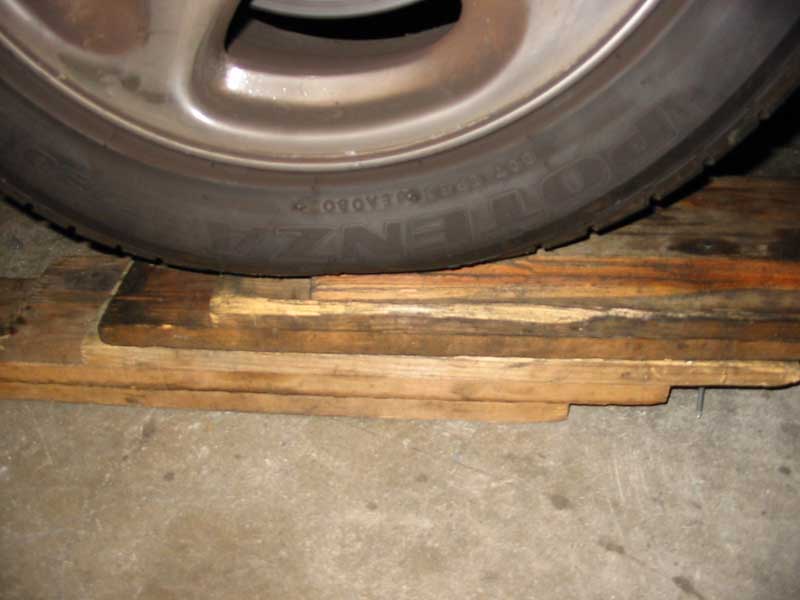
now, we drive the passenger tire ONLY up onto a couple of ramps.
this is about 4.5" tall. (ouch!!)
The lateral peice shows lots of sag. The passenger front corner is
flexing
towards the driver's rear corner.
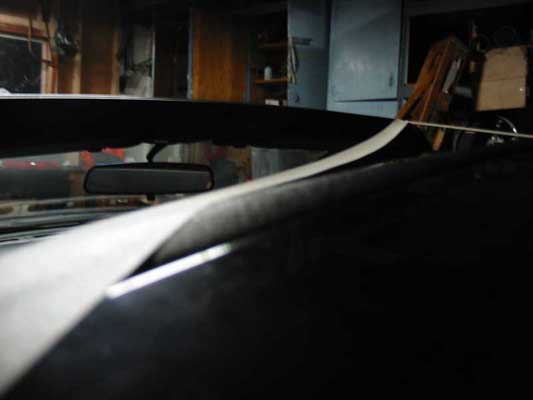
same lateral peice from front to back.
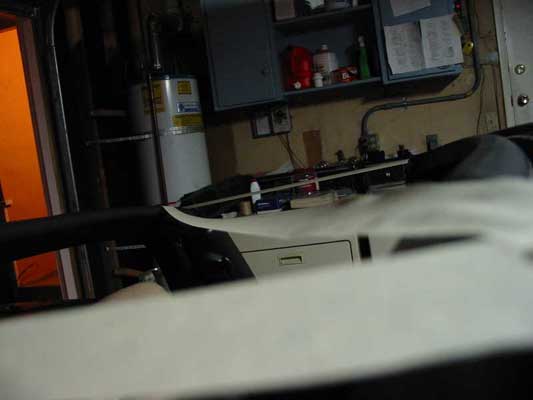
the view straight down the lateral peice.
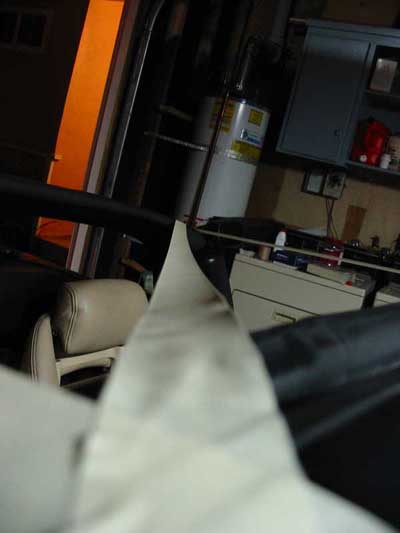
OK, now--this is NOT a repeat of the former shot of the
passenger longitudinal piece. This is it WITH the tire on
the ramp. Basically, no change.
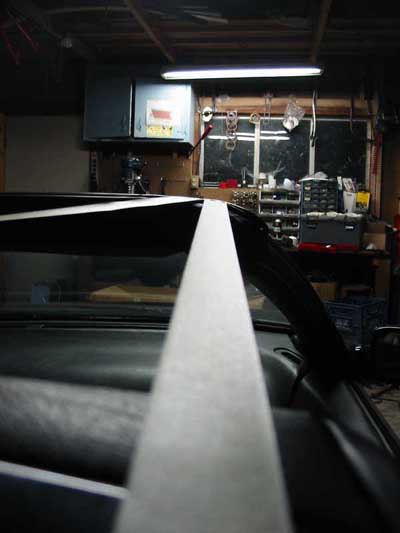
same for the driver's side. basically unchanged.
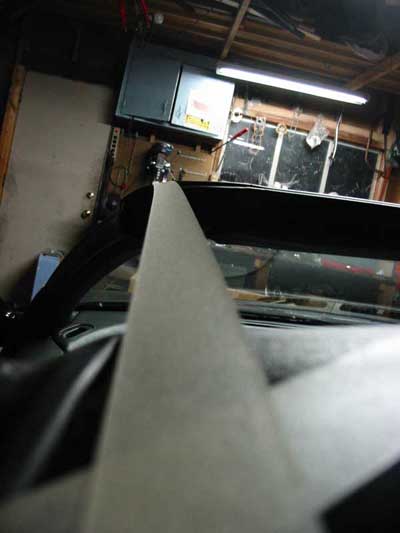
But with all that torsional flex on the frame, opening the
doors becomes more difficult.
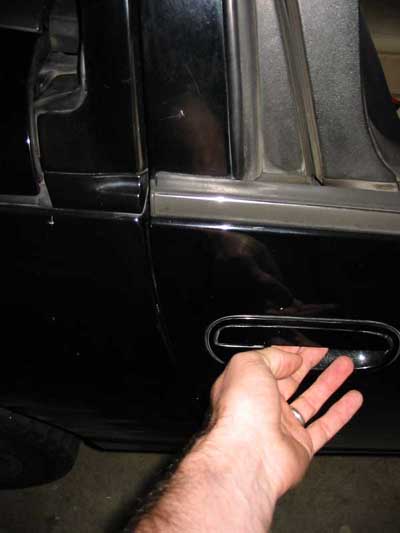
Bear in mind, this happens even with this beefed-up stock dash-board support tube I made!
The conclusion is: torsional flex is the greatest enemy of the Z32
convertible.
The doorsills and floorpan are actually quite immune to bending,
otherwise,
the longitudinal pieces would have sagged. But the doorsills and the
whole car, for that matter
can "twist". The car is subject to torsional twisting more than any
other force.
The roof keeps the car from twisting, mostly. The floorpan and sills
are so strong, they
do a really good job of preventing the whole car from sagging in the
middle.
This is felt most when one of the wheels hits something when the others
do not, which is
99% of the time while driving.
So, do we agree that the doorsills and frame rails don't need
stiffening as much as the car
needs some torsional/twist help? I hope so.
My own experience shows that anything you do to make each point of
suspension stiffer, ie: stiffer or shorter sidewalls, heavier springs,
heavy shocks,
sway bars, and a front strut bar (by itself with no under-bracing),
make the shaking worse,
instead of
better. You can feel what flex we saw with the tape, happen a few times
a second,
in your hands on the steering wheel, and stiffer suspension makes that
worse.
I don't know how many Z32 convertible owners that I've e-mailed with
who confuse
stiffening up your suspension, with stiffening your frame. They are two
different things,
and I assert, the former actually makes the other worse, unless you can
do something to fix the latter.
This makes sense when you consider that if the frame is twisty, the
stiffer
each corner is, it will flex the frame even more. I find that tire
pressures are
more crucial than on a coupe as well, and frequently drive with Potenza
RE730s
at 25psi
cold, on stock TT rims.
After doing some
looking around on the web:
http://www.y-car.com/mar/repair.html
...it's
pretty amazing to think that the Z32 convertible was shipped with NO
additional external bracing
at all, especially when cars of it's caliber and age-group (1990-1999)
were all shipping with additional
bracing of some kind for the convertible model, especially the BMW
3-series and the Corvette. In the
case of the BMW, it was a factory bolt-on performance part, and was not
standard. Same seems to go
for the Camaro and Firebird F-body cars, which in the first link is
shown twisting madly on a race course!
Also interesting to note that the 350Z roadster has a plethora of
external bracing, some it shares with the
350Z coupe, since, what is good for the convertible is always good for
the coupe as well. BMW shares
this philosophy and began shipping the M3 convertible brace on all the
special coupe "light M3" cars.
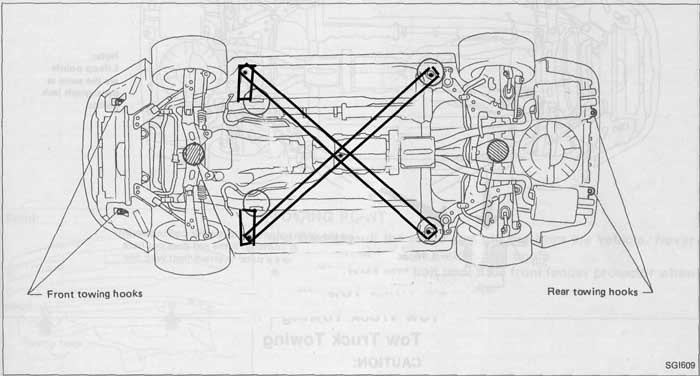
So, I have some ideas I'd like to share, and get feedback for.
here's the underside of a Z32.
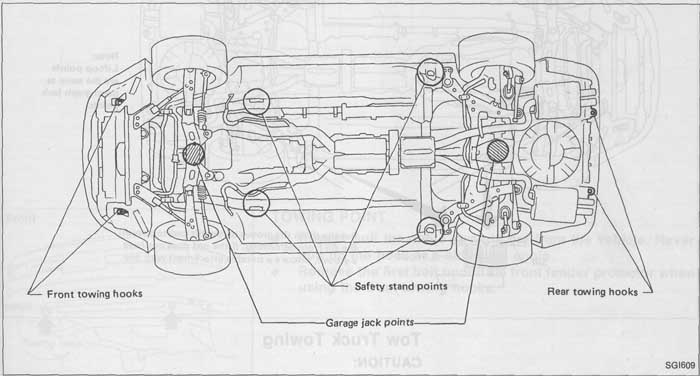
After looking under
a 350Z roadster for a bit, this is roughly how the bracing is laid out.
I added some additional lateral frame rails to bolt the front
braces to, since the 350 has them more
to the edge of the rocker/sill. Also, the further out we can grab, the
more stable we can get it.
The rear braces grab the area where the beefy rear jack-points already
are.
Now, making the attachment plates is another discussion I hope to have
on this site.
The center plate bolts to the already existing area where the aluminum
Z32 brace would go,
replacing it.
Get a look under a 350Z coupe or a roadster, the coupe has the rear
braces only. Both cars have
braces made from 18 or 16 gage stamped sheet steel! Not very strong
from a bending standpoint
but they don't stretch. And they're light.
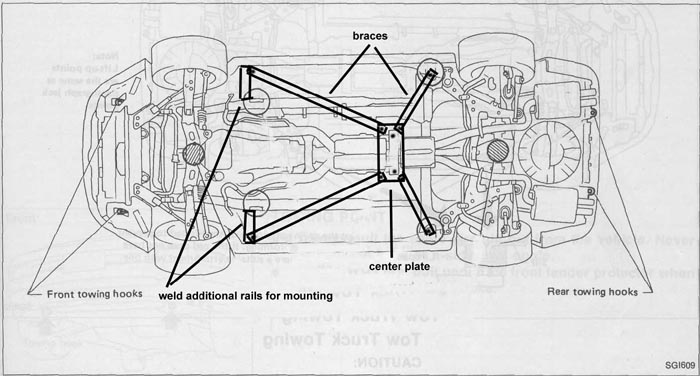
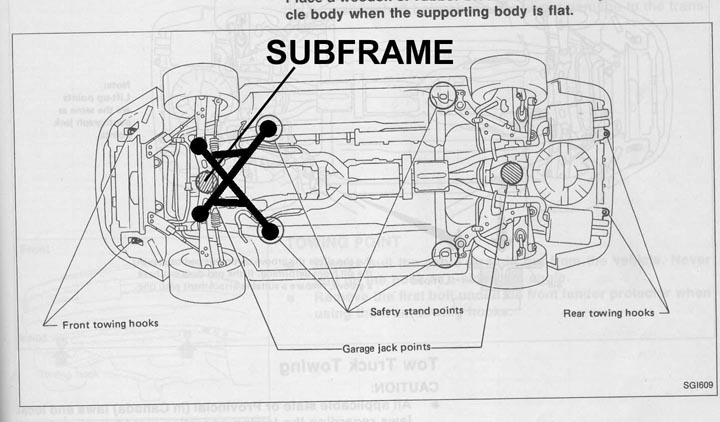
here's a more mondo
version of this that also tries to grab the attachment points of the
tranny
support piece. The front arms get shorter, which makes for stiffness
and less stretch. But the
center plate can start to get heavy unless you make it out of sheet
metal as well.
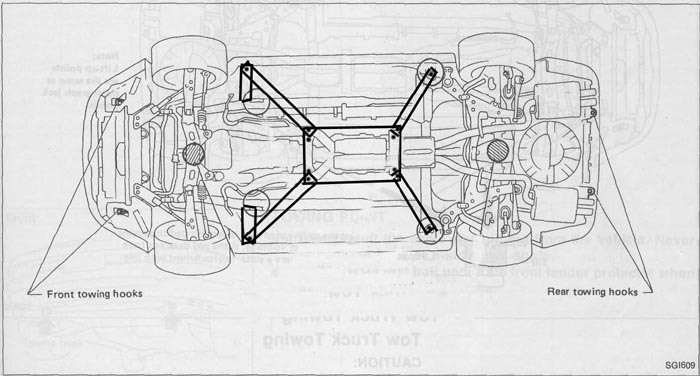
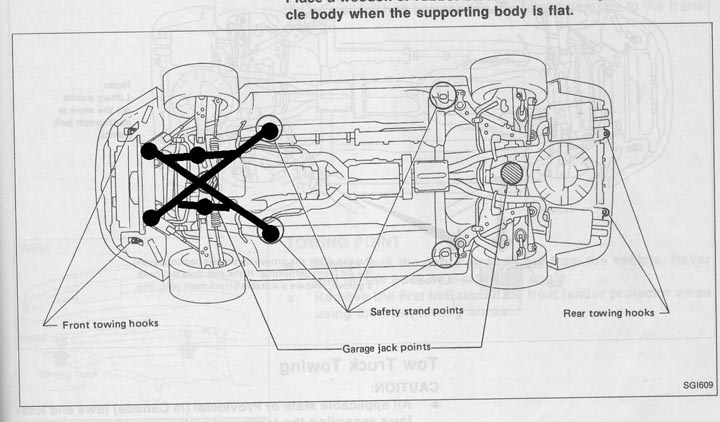
here's a budget
design. I still think any idea done in this vein requires the addition
of the front
lateral frame rails for mounting.
Cross-bracing up
front. There are few, if any, Convertibles listed in the links above,
as
well as the
350Z roadster AND coupe, that don't employ an X-shaped cross-brace as
well. But amazingly, again
the Z32 never had one. This is roughly the layout of the BMW
3-series brace, superimposed on a Z32.
Here's a hypothetical Mondo-Brace that would take advantage of the
Z32's attachment points even more,
and get the front mount points for the tension rods as well.
email comments to: Michael Smith
z32ttvert@pacbell.net